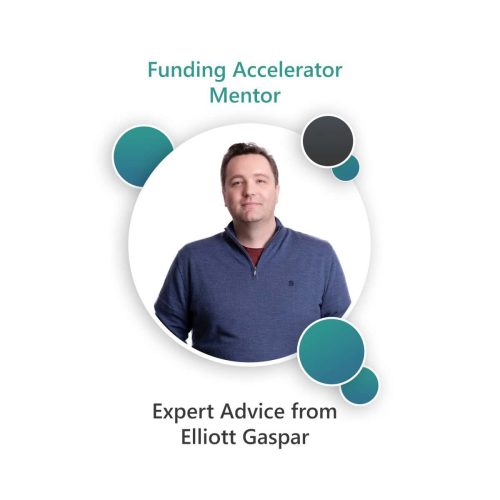
For early-stage startups, it can be a toss-up whether to go for grant funding or to start reaching out to investors about equity funding. To dig deeper under the skin grants vs equity funding debate, we asked Funding Accelerator mentor Patric Wong, who is an Innovate UK grant assessor, Venture Capital (VC) investment committee member, and a venture scout for another VC to share his pros and cons of grants vs equity to help you choose the right route for your startup. In his words, “Grant is basically more like science. VC is looking for a signal [of success and timing].” Treating grants and equity as different games helps you avoid mixed messages and wasted effort.
How grant assessors think
Grants are funded with public money. Decisions have to be evidence-based, criteria-led, justified and documented. Your application is not a pitch deck; it is a self-contained evidence package with clear scope, measurable activities, budgets, and appendices that support claims. When assessing grant applications, assessors will be provided with anonymous submissions and be provided with scoring guidance to ensure consistent scoring across defined categories. It is usually the case that more than one assessor will look at each application so scores can be compared across assessors to ensure agreement and appropriate decision-making. As a working rule of thumb, applications commonly need a high aggregate score to progress to interview, and assessors only score what is inside the application—external references or implied knowledge do not count. It is so important to read the grant competition brief carefully, check eligibility twice, and anchor every statement in verifiable evidence and value-for-money. Otherwise time spent on your grant application could be wasted!
How investors think
By contrast, when you apply for equity investment, investors make their decisions based on your narrative, your team and the progress made to date. Angel investors and Venture Capital (VC) adopt a portfolio approach to investing to offset risk. Venture Capital, in particular, are looking for businesses that have the potential to grow exponentially – and fast. Investors want to see a credible founding team with the skills, experience and contacts to build the business, a clear “why now,” and early traction that points to a large, reachable market.
Patric advises startups to think from the bottom up when defining the market, rather than starting with the Total Addressable Market (the biggest definition of your market). By thinking first about which customer groups experience the “pain” of the problem you are solving, you can show how you will win your niche first and then expand into other customer groups or markets. Recurring revenue (expressed as either Annual Recurring Revenue (ARR) or Monthly Recurring Revenue (MRR) is the strongest traction signal you can provide to investors because it blends market validation, pricing, retention, and unit economics into one number. As Patric framed it, “Your pitch deck is a trailer for a movie” with enough substance to prove there is a real film (your business), and a hook that earns a meeting, which could be traction or, perhaps, the team you have assembled.
Red flags that kill both routes
Founders lose momentum with investors when the story and numbers are inconsistent. In grants, this appears as out-of-scope activities, weak impact logic, or unjustified costs. In equity, it shows as top-down markets, statements claiming there is “no competition,” vague Ideal Client Profiles (ICP), or ignoring founder compensation in burn calculations. Another universal red flag is failing to answer why this problem, why you and why now. If those answers are weak, pause and fix the narrative before you send anything.
Practical steps you can take this week to refind your thinking as to whether grant or equity is right for your business
1) Use our checklist to help you decide if grant or equity investment is best for your business.
Think about what is at the heart of your need to raise funding and consider:
- If your work delivers public benefit, requires Research & Development (R&D) with partners to create something innovative, and can be specified up clearly with milestones and risk management, a grant could be a good fit.
- If you are chasing a commercial opportunity where speed, team quality, and market timing dominate, equity investment may be a better fit – but you will need evidence of market validation and business progress to secure investment.
Try writing one paragraph that states which route you are choosing the funding route and explain why. Be critical with yourself – would it withstand a grant application process or excite an equity investor?
2) Build the grant evidence spine (if applying).
Translate your paragraph into a full plan with assessable elements including objectives, work packages, deliverables, risks, budget lines, partner roles, and impact. Assume assessors will not look beyond the application so everything important must be covered in these elements. You can add appendices for references and technical proof. Find a critical friend and ask them to assess your plan. How would they score you on project scope, “value for money”, and “team capability,” and what evidence would close that gap? Grant applications take a lot of thought and time and if they don’t withstand feedback from your friend, they are unlikely to withstand grant assessor interrogation!
3) Tighten the equity signals (if fundraising).
Rather than jumping straight to writing a pitch deck, pull together a one-page buyer profile for your target (prospective) customer. If you are targeting business buyers, think about their job title, the Key Performance Indicators they are tasked with, who holds the budget to make a purchase, and think about risks beyond your control like political or environmental factors. If you are targeting consumers, think about demographics, life stages, their needs and behaviours. Your aim is to bring your prospective customer to life so investors can recognise the market you are targeting. Next, list three observable triggers that makes buying your solution (product or service) urgent for your prospective customer. Draft five short “pain points” that your product or service solves for your prospective customer. Now do some market research to identify actual prospective customers who match what you have described. How many are there? Where do you find them? Why would they “buy now”? Doing this recasts your market size from the bottom-up. If you want to make it really strong, add pricing and conversion assumptions. This is the data that will help you stand out when talking to investors.
4) Get an outside read.
Ask a friend or fellow startup founder, ideally one who knows your sector, to review your thinking for clarity, scope fit, and numerical consistency. Don’t waste time going straight to a grant application or an investor unless your thinking withstands this type of “friend test”.Treat every question asked as a clue for what you need to improve.
A simple checklist for checking if grant or equity is best for your business
For grants
• Eligible and in scope, with public benefit clearly defined.
• Objectives, work packages, and risks are specific and measurable.
• Budgets mapped to activities and partners; value-for-money should be clear.
• Evidence attached in appendices; application must be self-contained, do not assume your assessor has any pre-existing knowledge.
• Run an internal mock-scoring across each criterion to ensure your application meets or exceeds the expected threshold.
For equity
• Problem narrative first, solution second; “why now” stated plainly.
Show you have the team to deliver the business; roles and gaps acknowledged with plans to fill.
• Bottom-up market size; competition mapped honestly.
• Traction shown (ARR/MRR preferred) or strong near-term proxies.
• Data room basics ready: metrics, pipeline, financial model, key contracts.
If you are preparing your business for investment, why not join a free, online Funding Strategy Workshop where you will hear three insights that increase your chances of successfully raising investment and can ask any questions you may have. Book your place.
FAQs – Grants vs Equity Funding
Are grants still worth it for early-stage startups?
Sometimes. Success rates can be low and reporting obligations are real. If your project has clear public benefit, defined milestones, and the right partners, a grant can de-risk critical R&D without dilution. If not, focus on customers and revenue first.
What do Innovate UK assessors actually score?
Only what is inside the application. They follow defined criteria, multiple assessors review each submission, and high aggregate scores are typically needed to progress. External references and implied knowledge do not count; attach evidence and make value-for-money explicit.
What traction matters most to angels and VCs?
ARR/MRR because it captures validation, pricing, retention, and delivery. If you are pre-revenue, show strong proxies, paid pilots, LOIs with dates and amounts, or regulated approvals that unlock revenue.
How should I size the market?
Go bottom-up. Start from named account counts, pricing, and realistic conversion at each stage. Top-down totals look large but do not prove reachability or focus.
Is it ever acceptable to say “no competition”?
No. That signals weak market understanding. Map direct and substitute options and explain your wedge and switching rationale instead.

- Why your marketing problem may really be a value proposition problem - October 9, 2026
- From founder-led sales to a repeatable growth engine - October 9, 2026
- CASE STUDY — FOCUSED FOR BUSINESS - October 9, 2026